About
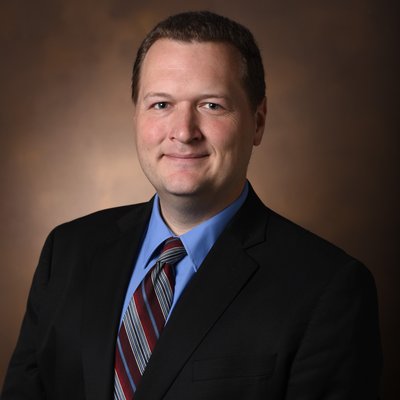
Dr. Travis Osterman is a practicing medical oncologist and biomedical informatics executive. At Vanderbilt Health he is Associate Vice President for Research Informatics, Associate Chief Medical Information Officer, the Ingram Associate Professor of Cancer Research, and Director of Cancer Clinical Informatics at the Vanderbilt-Ingram Cancer Center. He chairs the minimal Common Oncology Data Elements (mCODE™) Executive Committee.
Origin
A computer science course Travis Osterman never planned to take is the reason this site exists.
In the fall of 1999, his undergraduate advisor at the University of Indianapolis signed him up for CS 100. He hadn't asked to take it. He took it anyway, and enjoyed it, and signed up for the next one. He kept doing that until he had a second major. By 2003 he graduated magna cum laude in both Biology and Computer Science - not because he had set out to combine the two, but because parallel curiosity took him there one course at a time.
That pattern - follow the interesting problem until it becomes a discipline - is the through-line of the next two decades.
After medical school at Nova Southeastern College of Osteopathic Medicine (where he served as class president each of four years) and internal medicine residency at Indiana University (chief resident at Wishard Memorial), Travis came to Vanderbilt for oncology fellowship in 2013. Vanderbilt was deliberate. It was a rare opportunity: train at an institution with an exceptional reputation in both medical oncology and biomedical informatics. He came planning to add a Master's in Biomedical Informatics on top of the fellowship. It was the right bet. The fellowship finished in 2016; the MS in 2017. The fellowship made him an oncologist; the MS gave formal vocabulary to the work he had been quietly doing since CS 100 in '99.
The pivot from "oncologist who also codes" to chairing an international cancer data standard wasn't a leap. It was a network compounding. By 2017 he was on the faculty at Vanderbilt-Ingram Cancer Center and active across multiple ASCO committees. Mentors helped him route into the broader cancer informatics national landscape. When the original mCODE working group was being assembled, he got the invitation and said yes immediately. He has been in the room ever since - eventually as chair of the executive committee that now stewards the standard implemented at more than seventy institutions across six countries, and that serves as the only method of submitting data to CMS' Enhancing Oncology Model.
The role of "physician executive" was a slower realization. The work changed before the title did - a long journey from individual contributor, to managing a team, to becoming the person people look to for direction. The transitions came as the questions got bigger. How do you implement structured genomic data into the EHR for tens of thousands of patients? How do you align Epic, Microsoft, Tempus AI, GE HealthCare, and NCCN around a shared model for cancer data when each company has its own infrastructure? Those aren't problems an individual contributor solves. He grew into the role the work required.
What he actually enjoys, in his own words, is fixing things and solving problems. Specifically: building better systems around automation and standardization that improve workflows in both clinical care and research. The reason mCODE matters to him isn't the standards politics - it's that mCODE is the systems improvement. Fewer custom mappings between institutions. Fewer one-off integrations. Less friction between the data clinicians enter and the data researchers need. A standard is a force multiplier for everyone downstream.
The same instinct shows up outside the day job. He started a Linux configuration documentation site called gentoovps.net in 2011, during his internal medicine residency, and that site has evolved into today's fld.sh. He runs his own infrastructure-as-code, his own self-hosted journal, his own multi-agent orchestrator. He built school.osterman.co - a self-paced STEM platform with more than 400 courses - so his children would have something interesting to do when the school year ended. The same person who chairs mCODE for cancer-data interoperability has been writing software for himself, his family, and his curiosity since college.
It is the same instinct, applied at every scale. Find something that doesn't work as well as it should. Build the system that fixes it. Repeat.
Practice and leadership
Under his leadership at Vanderbilt-Ingram, the Vanderbilt Health electronic health record contains more structured genomic data than any other institution in the United States. Nationally, the mCODE™ standard is implemented at more than 70 institutions across six countries and serves as the only method of submitting data to CMS' Enhancing Oncology Model.
Leadership
- Mid-Career Leadership Development Program - Vanderbilt University School of Medicine, 2020
- Chief Resident - Department of Internal Medicine, Wishard Memorial Hospital, Indiana University, 2012–2013
- Class President - Nova Southeastern College of Osteopathic Medicine, 2004–2009
- Student Body President - University of Indianapolis, 2001–2002
Boards and credentials
- Board certified in Medical Oncology - American Board of Internal Medicine (2016)
- Board certified in Clinical Informatics - American Board of Preventive Medicine (2016)
Training
- MS, Biomedical Informatics - Vanderbilt University, 2017
- Fellowship, Medical Oncology - Vanderbilt University Medical Center, 2013–2016
- Internship and Residency, Internal Medicine - Indiana University, 2009–2012 (Chief Resident, 2012)
- DO - Nova Southeastern College of Osteopathic Medicine, 2009
- BS, Computer Science and Biology, magna cum laude - University of Indianapolis, 2003
Selected honors
- Fellow, American Society of Clinical Oncology (FASCO), 2023
- Microsoft Investigator Fellowship, 2020
- Fellow, American Medical Informatics Association (FAMIA), 2019
- Conquer Cancer Foundation Young Investigator Award, 2016
- DO Student of the Year - Nova Southeastern College of Osteopathic Medicine, 2008
- Outstanding Student in Computer Science - University of Indianapolis, 2000, 2001, 2002
Explore
- Now - what he is focused on this season
- Career timeline - roles, training, and publications by year
- By the numbers - the record quantified, each figure sourced
- Collaboration network - the co-authorship graph and his most frequent co-authors
Profiles
- Vanderbilt Biomedical Informatics profile
- PubMed / NCBI bibliography
- Wikidata (Q101153359)
- Machine-readable CV (JSON Resume) - structured career data for agents and crawlers
ORCID, Google Scholar, LinkedIn, X, and GitHub are linked in the footer.
Advisory disclosures and industry partnerships: /collaborations/.
Frequently asked questions
- Who is Travis Osterman?
- Travis Osterman, DO, MS, FAMIA, FASCO is a practicing medical oncologist and biomedical informatics executive. He serves as Associate Vice President for Research Informatics at Vanderbilt Health, Director of Cancer Clinical Informatics at the Vanderbilt-Ingram Cancer Center, and Chair of the mCODE Executive Committee.
- What is Travis Osterman board certified in?
- He is board certified in medical oncology (American Board of Internal Medicine, 2016) and clinical informatics (American Board of Preventive Medicine, 2016).
- What is mCODE, and what is his role in it?
- mCODE (minimal Common Oncology Data Elements) is a FHIR-based oncology data standard implemented at more than 70 institutions across six countries, and the only method of submitting data to the CMS Enhancing Oncology Model. Dr. Osterman chairs its Executive Committee.
- Which organizations does Travis Osterman advise?
- He advises Microsoft, Epic, Tempus AI, and the National Comprehensive Cancer Network (NCCN), and founded the Epic Beacon Community Operations Group.
- How can I contact or work with Travis Osterman?
- Consulting, speaking, and advising engagements are managed through WSOR, LLC. Use the contact form at osterman.co/contact/ to send an inquiry.